Crawl Space Mold Remediation in Gonzales, LA
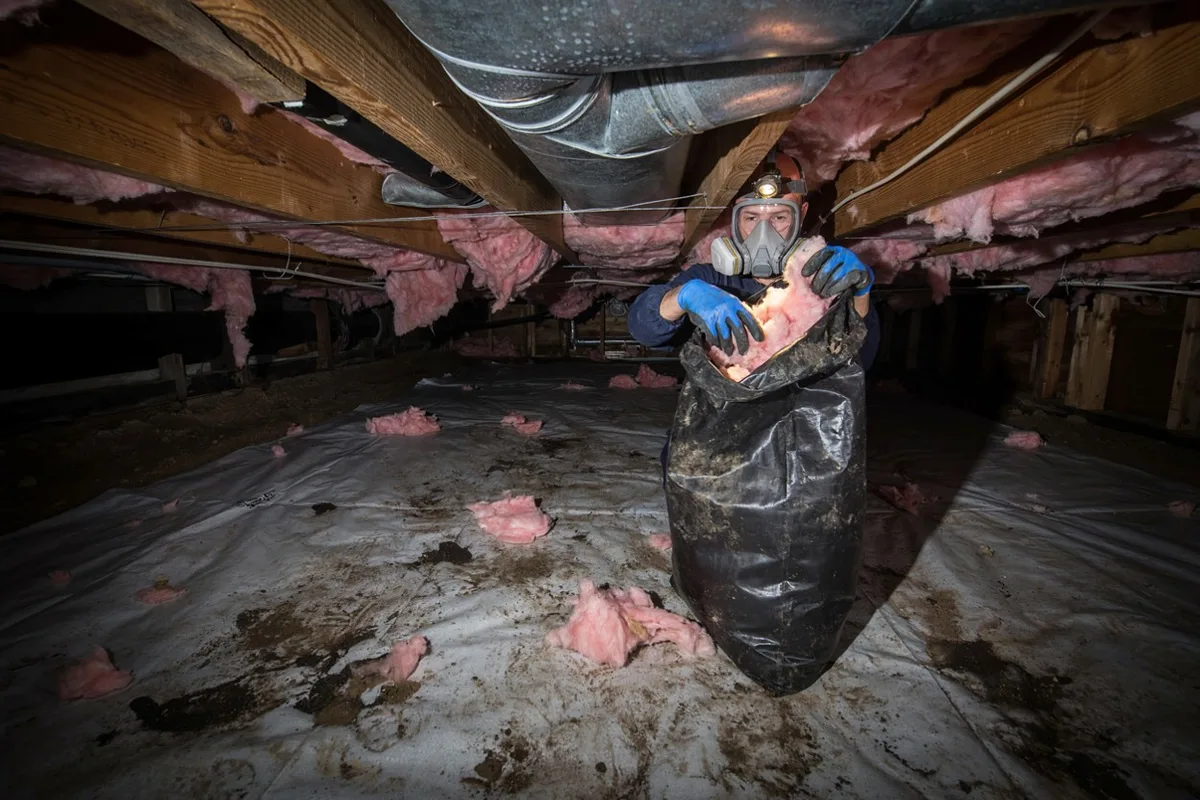
Most of Ascension is slab, but not all of it. The historic blocks of Donaldsonville, the river-road houses through Darrow and Burnside, older homes around downtown Gonzales and St. Amant, and a good number of newer raised houses on the low ground toward Sorrento all sit on piers with a space under the floor that never sees sunlight. A musty smell that comes up through the floorboards, a soft spot near a bathroom, insulation hanging loose between the joists — those are crawl space calls. Call and tell us what the floor feels like.
What happens under the house
We go under with a light and a moisture meter and map the growth on the joists, the subfloor, and any insulation between them. The access gets sealed and the space goes under negative pressure so the work doesn’t push spores up into the rooms above. Joists and subfloor stay and get cleaned in place, then HEPA-vacuumed. Wet insulation comes out in bags; it can’t be cleaned. LSU AgCenter’s guidance is that the wood should read below twenty percent moisture, ideally fifteen, before anything is closed back up.
Why the smell is coming through the floor
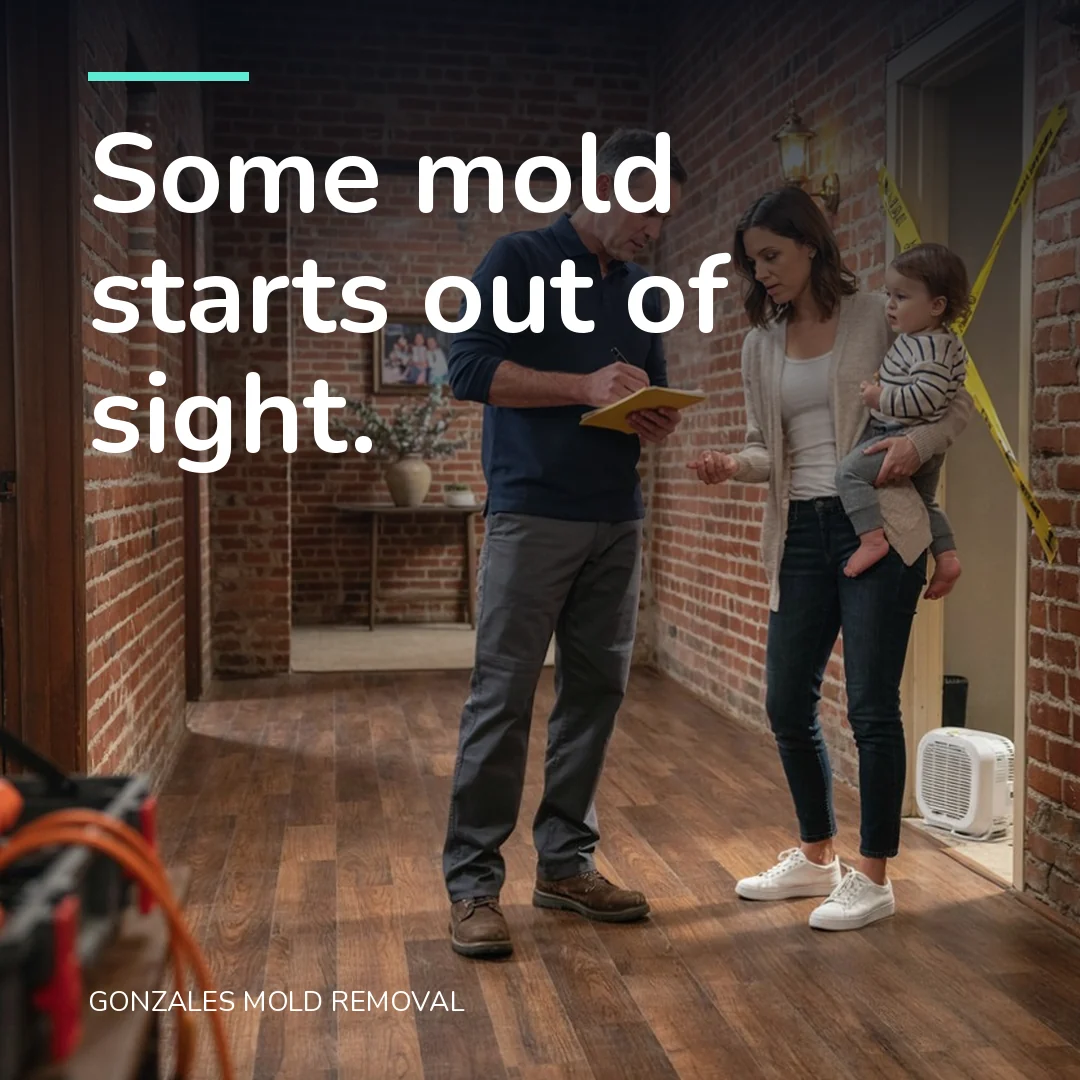
- Some mold starts out of sight, and a crawl space is the most out-of-sight place in the house.
- “I can’t see anything” doesn’t end the question when the musty smell is strongest at floor level.
- The space stays wet because of grading that sends rain under the house, a plumbing drip, summer air condensing on cold pipes, or bare dirt with no vapor barrier.
- Cleaning the joists without changing what keeps them wet is a repeat job.
Tell Us What The Floor Feels Like, 24/7
Ascension notes
Donaldsonville is the clearest case: nineteenth-century raised houses a few blocks from the Mississippi, with a hundred years of plumbing and roofing repairs above a dirt crawl space. On the east bank, the river-road houses through Darrow and Burnside are the same story. And any raised house near the Amite or Bayou Manchac that took water in 2016 was dried from the top; what sat under the floor doesn’t dry on its own here. We tell you what we saw under there and what has to change for the cleaning to hold, and it goes in the written report.