Black Mold Removal in Gonzales, LA
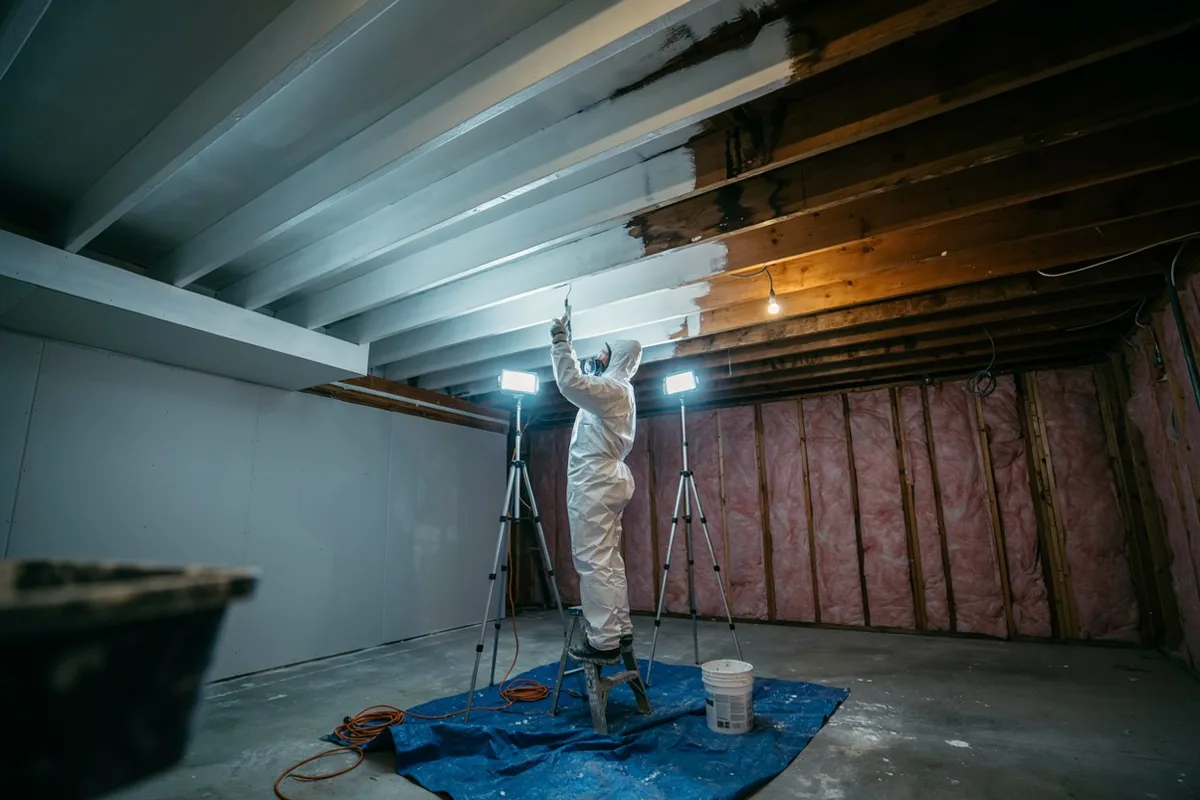
A dark patch in a house that was built five years ago gets people on the phone faster than almost anything else, and the first question is always whether it’s “the bad kind.” Here is what CDC says: it isn’t necessary to identify the type of mold, because all molds should be treated the same way and removed. We remove dark mold, light mold, and every shade between in Gonzales, Prairieville, and Ascension Parish.
What a dark patch usually tells you
The mold people mean by “black mold,” Stachybotrys, is greenish-black and grows on material with a lot of paper in it — drywall, ceiling tile, fiberboard — that has stayed wet for a long time. It needs constant moisture. So a dark patch on a newer wall is less a warning about the species and more a note about the leak: it has probably been running longer than you think. Many other everyday molds are dark as well. CDC also says the reported link between this mold and severe illness in infants has not been proven, and it hasn’t found conclusive evidence tying airborne mold toxins to illness. What CDC does say is that damp, moldy homes can cause stuffy nose, sore throat, coughing, wheezing, burning eyes, and skin rash, and that people with asthma or weakened immune systems are at more risk. That is reason enough to remove it, and no reason to panic.
The build date isn’t a defense
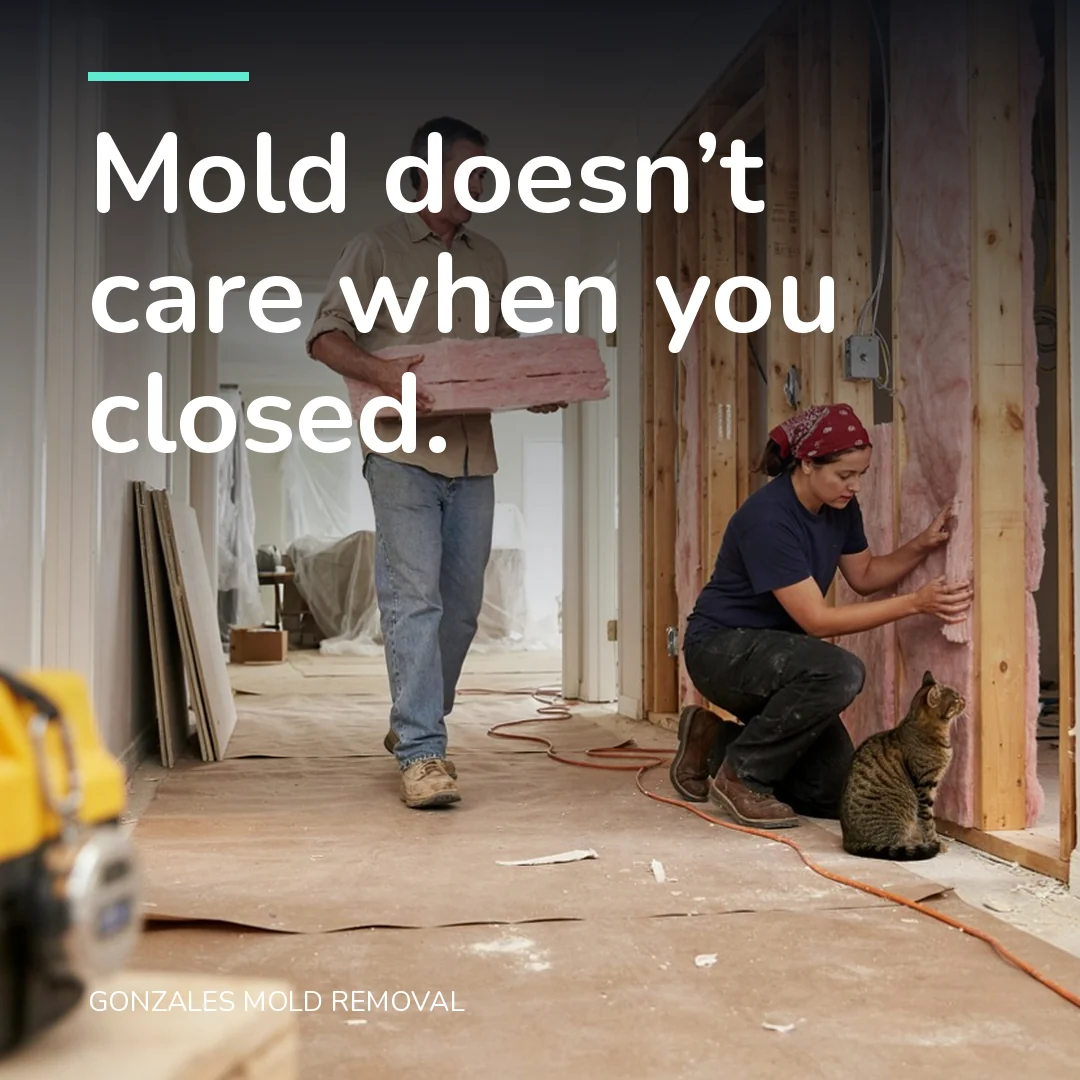
- Mold doesn’t care when you closed — a wall built in 2020 holds water the same way one built in 1980 does.
- “This house is too new for mold” can be an expensive assumption, because it delays the call while the wet area grows.
- New drywall isn’t waterproof; it soaks up a leak and holds it against the studs.
- Dark growth on paper-faced material means something stayed wet for a while, which is the real problem to solve.
Tell Us Where You See It, 24/7
How we remove it
The same way we remove any mold. The room is sealed in plastic and kept under negative pressure. The stained drywall comes out, and so does whatever is behind it that got wet — insulation, the paper facing on the next sheet over, the bottom of the baseboard. It’s bagged inside the seal before it leaves the room. Studs and plates get cleaned in place, HEPA-vacuumed, and left open until they read dry. Then we tell you where the water came from and what has to change so the patch doesn’t return.
Ascension notes
In this parish a dark patch most often follows a roof leak into a ceiling, a supply line inside a bathroom wall, or an air handler drain pan that overflowed in the attic. On the Amite River side, some houses dried and rebuilt after the 2016 flood still show a dark line along the bottom of a wall years later. If it appeared after something got wet and hasn’t stopped growing, call and tell us where it is.